We live inside Einstein's view of the universe. If you ignore a century of refinement, then the working ontology of modern physics is his: a four-dimensional manifold, a geometry that bends in the presence of mass-energy, and light as the one fixed thing against which everything else is measured.
The one place his view will not go is the wonderfully strange world of quantum gravity. Special relativity was absorbed whole into quantum theory generations ago; the Standard Model is relativistic and holds to more decimal places than almost anything else we know. What has never combined is gravity, the curved-spacetime part of Einstein's legacy.
This is Einstein's curse. Not that he was wrong, but that he was so nearly, so productively right that we cannot bring ourselves to look past him.

1 Two Pillars of Evidence
Quantum mechanics has a rarely stated advantage: its laboratory is here. We can hold a single ion still enough to interrogate it for days, and the theory matches observation to twelve significant figures. The electron's magnetic moment agrees with calculation to the equivalent of measuring the distance from New York to Los Angeles to within the width of a human hair. Nothing in the history of science has been confirmed so brutally well.
General relativity cannot be put in a box — we cannot build a star. But we can look, and the looking has been spectacular. We have heard two black holes merge a billion light-years away and measured the ringing of spacetime against a prediction made decades before the measurement instrument existed. We have photographed the shadow of an event horizon. Every test the theory has been handed, it has passed. Two theoretical models, accurate, predictive and maddeningly incompatible.
2 The Missing Glue
The best minds in the field have spent entire careers looking for unification: a single formalism that contains both, reduces to general relativity at large scales and quantum field theory at small ones, and predicts something new where they overlap. Strings. Loops. Twistors. Supergravity. Causal sets. Asymptotic safety. Perturbative gravity. Each ingenious, each full of beautiful mathematics, and none has produced a single confirmed prediction the two parent theories did not already give us.
Normally, physics advances by tension: two good descriptions disagree, someone resolves the disagreement, and the resolution pays out in new predictions and observation. The clash between special relativity and Newtonian gravity paid out, within a decade, as the general theory of relativity. The tension between quantum mechanics and general relativity has paid out nothing. Seventy years, the most capable physicists who have ever lived, and the unification cupboard is bare. That is not how a solvable problem behaves. When a problem this important resists this many good people for this long, the correct inference is that we may be asking the wrong question.
3 A Fork in the Road
There are two paths to take from here.
The consoling one: Assume that the glue exists and we simply cannot reach it. Either the universe is cruel and quantum gravity shows its hand only at the Planck scale, sixteen orders of magnitude beyond anything we can probe, or it is merely hard and we have not yet been clever enough. In both, the failure is on us and patience and genius may eventually pay out.
The uncomfortable one: Assume there is no glue because there are not two things to glue. Quantum mechanics and General Relativity are both downstream descriptions — each a fanatically accurate account that emerges from a deeper structure that has remained hidden from us. In short, not a unification. A new foundation that produces both as limits, with all their predictive power, while being structurally unlike either.
Fortune favors the bold. I therefore argue the way forward is not a more elegant marriage of two theories. It is a willingness to rethink both in the light of a new physically inspired foundation.
4 Others Have Doubted Time
So where does the rethinking start? With the assumption everything else quietly rests on: time.
It would be flattering to frame doubting time as a question no one is brave enough to ask. It would also be false. Whether time is fundamental is not fringe heresy; it is a live, decades-old establishment research program, pursued by exactly the people the field takes most seriously.
Canonical quantum gravity yields the Wheeler-DeWitt equation, which has no time component: HΨ = 0, the wavefunction of a universe that does not evolve. An entire subfield — known plainly as "the problem of time" — exists because the most natural quantum description of the cosmos comes out frozen. Julian Barbour built a whole physics in The End of Time, where time is read off a timeless configuration space. Carlo Rovelli derives the flow of time from thermodynamic and statistical state. And Don Page and William Wootters proposed, back in 1983, that time emerges from entanglement: a clock is just a subsystem, and what we call time is the correlation between that clock and everything else.
5 The Clock on the Bench
Over a decade ago a group in Turin ran the Page and Wootters picture on a bench: two entangled photons, one the clock, one the system it timed. Ride along with the clock photon and you see its partner evolve, tick by tick, just as Schrödinger says. Stand outside the pair and nothing evolves at all — the joint state just sits there, frozen, exactly as Wheeler-DeWitt insists. Both observers are right. Time existed inside the correlation and not outside it. That was the whole difference.
Two photons is a curiosity, and a skeptic could fairly say so. However, Giovanni Barontini took a Bose-Einstein condensate — tens of thousands of rubidium atoms cooled until they move as one — and dropped a wall of light through the middle. One half he watches. The other half, his "dark sector," he never observes on principle. The watched half cycles through what he openly calls a big bang, an expansion, and a big crunch, over and over, as atoms cross the wall and return.
Within this world, he eliminates the laboratory clock — the external time every experiment leans on — and orders events with one internal number: the entropy that has crossed the wall. Entropy flows, the clock ticks. No flow, no tick. Feed this homemade time back into a Schrödinger equation and it reproduces what he measured. Inside that half of the trap, the entropy count is the only time there is.
The rate is set not by the continuum but by traffic. Quick when the halves trade freely, throttled when the wall goes up, stopped dead when the exchange dies. Raise the barrier high enough and the watched half drifts into what Barontini calls heat death: in laboratory time it is merely sitting there; in its own time it has no time at all. Its clock has run out of fuel.
Nothing in the experiment says time is an illusion. The clock is real and its ordering is the right one. What it is not is external. Time in that trap is relational — the running record of one system's exchange with another it cannot see. Bookkeeping made physical.
Which leaves the question the experiment is careful never to ask out loud. Barontini's clock ran on entropy leaking into a half of the trap he chose not to look at. Real clock, real reservoir, rate fixed entirely by the traffic between them. If the emergent time of a rubidium condensate is just the record of its exchange with a hidden partner, and the master equation of the universe seems to demand a clock built exactly this way, then the interesting question is no longer whether our time is emergent in the same sense. The correct question is: What is our time a record of? What sits on the other side of our wall?
6 Where I Place the Doubt
So the bravery is not in asking whether time is fundamental. That ship sailed decades ago. If there is any nerve required here, it is in where you place the doubt.
Notice what every one of those programs has in common. Each demotes time, and each demotes it to the quantum. Time emerges from entanglement, from configuration space, from entropy crossing a wall of light — yet quantum mechanics itself is left standing as bedrock, the deeper thing from which time is read. They suspect time. They do not suspect the quantum. The floor they dig down to is still a quantum floor.
What I want to suspect is narrower and stranger: not that time emerges from quantum structure, but that the rate we have mislabelled as a flowing dimension is a property of whatever the universe most fundamentally is — the single ontology that the quantum and the geometric each describe from one side and each mistake for the whole. Same data. A different floor.
That is not a small claim, and it carries a heavier debt than any of those programs takes on. They demote time but keep quantum mechanics to stand on. I am giving up that footing, and asking one substrate, neither quantum nor geometric, to give back both faces in full: every interference fringe and entangled correlation on one side, every curve of gravity and tick of a dilated clock on the other.
One prejudice up front: whatever that ontology is, Occam's razor says it is simple. The elaborateness is all on our side of the glass — two magnificent, mutually incompatible formalisms, each bristling with structure, parameters, and special cases. The thing they are both describing need not share any of it. The deepest answers in physics have a habit of turning out shockingly plain once they are finally seen. We have been looking for something complicated enough to contain both theories. We should instead be looking for something simple enough to produce them.
To earn any of that, I need to be specific about which part of Einstein I am keeping and which part I am putting on trial.
Einstein was right about light. The constancy of its speed, its role as conversion factor and speed limit, the way it refuses to care about your motion — this is among the most thoroughly confirmed facts in physics. Light behaves exactly as he said (mostly).
But relativity bundles a second claim in with the first, and we have learned to treat the two as one insight when they may be entirely separate. It says that time is a dimension, a fourth axis geometrically of a piece with the three of space, and that the bending and stretching of this axis is what we observe as time dilation. A clock near a mass runs slow because the time dimension itself is curved there. A moving clock runs slow because its path through the manifold is tilted. The dilation is geometry.
We have tested the dilation exhaustively. Muons live longer when they move fast. Clocks flown around the world disagree on return. GPS would drift by kilometres a day without the correction. All real, none in dispute.
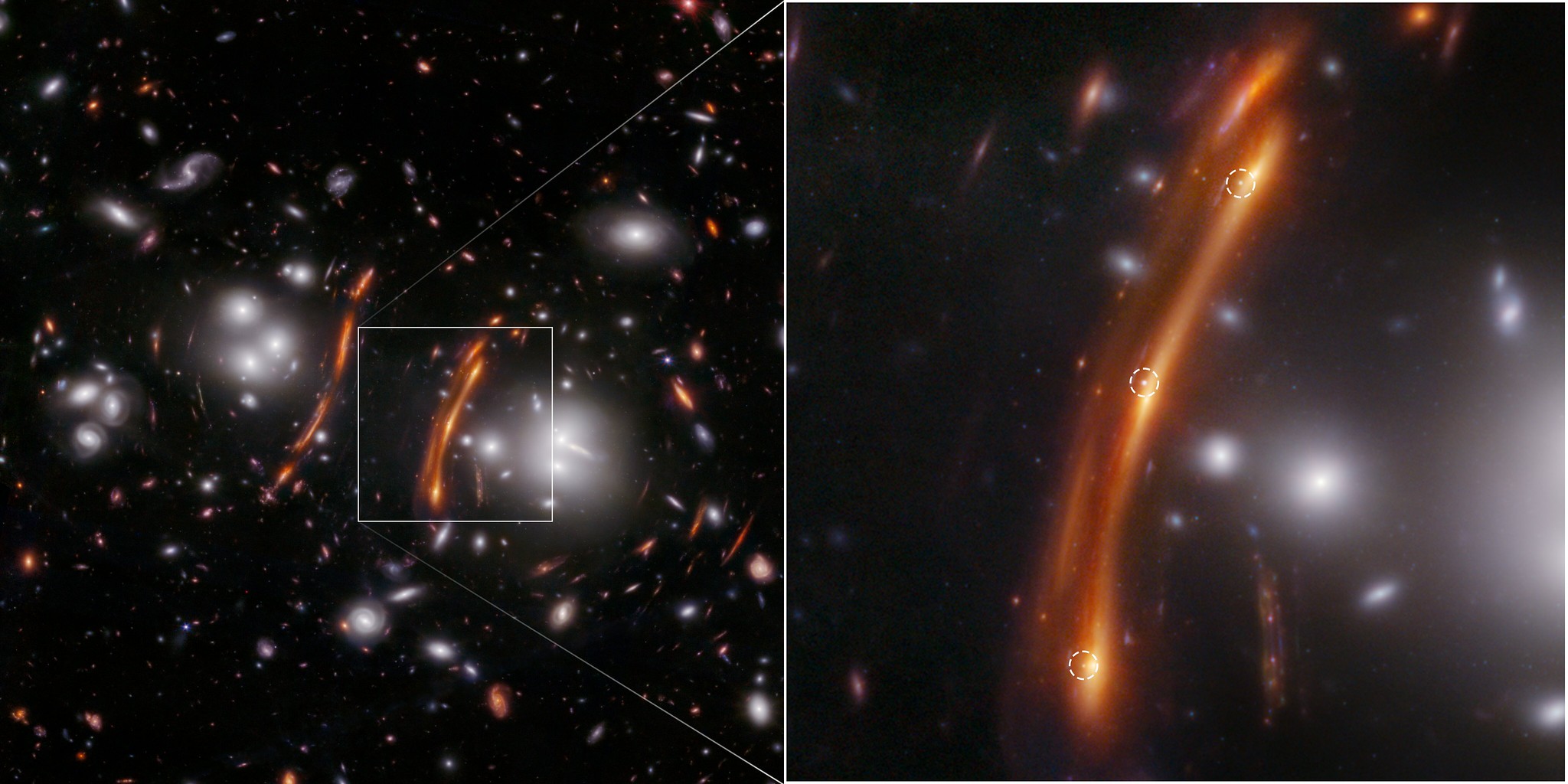
But look hard at what we have actually confirmed. Clocks run at different rates under motion and gravity — the effect. We have not, and cannot, directly observe the cause: the claim that the effect arises because time is a literal dimension that bends. That last step is interpretation. It is the ontology Einstein hung on the data, so useful and so habitual that we have stopped seeing it as a choice at all.
To be fair, the fourth axis is not mere habit. It earns its keep as machinery. Write time into the geometry and the hard problems turn into calculations you can actually do: integrate along a worldline and out drops the thirty-eight microseconds a day by which an orbiting clock outruns its twin on the ground. There is no correcting a GPS clock without a t in the equations. So any successor faces a difficult hurdle: produce the corrections using its own currency from local state in some way nobody has yet shown — or re-import t as a coordinate, because the coordinate is what carries the computation. I suspect the second option describes what happened in 1908, run in reverse. Minkowski did not discover that time is a dimension. He discovered that treating it as one is a magnificent computational simplification. Those are not the same discovery.
So here is the sharpened question. What if time is not a dimension, and the dilation we measure has nothing to do with a bending axis at all?
7 The Concept Is Not New
If the idea that the same numbers can support two different worlds sounds like wishful hand-waving, it is not. We have a worked example, a century old, hiding inside the mathematics of relativity itself.
The equations at the heart of special relativity are the Lorentz transformations, named for Hendrik Lorentz, who wrote them down before Einstein and read them to mean something completely different. In his picture there was a real medium filling space, a preferred frame of rest, and motion through that medium physically compressed moving objects and slowed moving clocks. Not a perspective effect, not a tilt in geometry — a literal, mechanical response of matter to its passage through the medium.
Lorentz's theory and Einstein's make the same predictions. Not approximately: identically. Every dilation result, every contraction, every experiment ever performed comes out the same in both. The data never chose between them. What Einstein offered instead was economy: drop the unobservable medium, keep the equations, reinterpret the contraction as kinematics rather than mechanics. Minkowski wrapped that economy in beautiful geometry, time became the fourth axis, and the medium quietly vanished from the textbooks. Geometry won on elegance, and it deserved to. It did not win on evidence, because on the evidence the two were tied. We chose the prettier of two empirically identical pictures and then forgot it had been a choice.
There is a real cost to the road Lorentz took. Gravitational dilation is easy to picture as throttling: a clock deep in a gravitational well really does run slow, and everyone agrees that it does. But velocity dilation is reciprocal. I see your moving clock run slow, you see mine run slow, and both of us are right. A picture in which there is a fact of the matter about whose clock is truly slower seems to demand a preferred frame — the very thing relativity was celebrated for abolishing.
This is exactly where Lorentz already did the work. His preferred frame survives the reciprocity because it is undetectable: the same contraction that slows the moving clock also shrinks the rulers and detunes the instruments that would have caught it. A preferred frame is not refuted by the reciprocity of dilation; it is only made invisible by it. But the bar is higher now. A modern preferred frame must survive a century of increasingly violent attempts to catch one — clock comparisons, tests of Lorentz invariance in particle physics, the timing of light from distant gamma-ray bursts — every one null to staggering precision. Any rate that wants a preferred frame inherits that entire gauntlet. It must be exactly as invisible as Lorentz's was, against instruments Lorentz never dreamed of. I would rather that constraint be the thing that kills the idea than a thing the idea pretends not to see.
8 What if Time Is Not a Dimension?
Lorentz changed the cause and kept the numbers a century ago. The question is whether the same trick survives one layer deeper — whether we can keep every digit of the dilation data while pulling the explanation out from under geometry entirely. A new picture earns nothing if it cannot give back the muon's extra microseconds and the GPS correction.
So suppose time is not an axis but a rate: a count of process, the local tempo at which the substrate updates itself. Not a direction you move through — a bookkeeping of how fast change happens here versus there. A clock built exactly this way has already run in Barontini's trap, and its tick was nothing but the traffic across a wall.
In that world, time dilation stops being geometry and becomes throttling. A clock near a mass runs slow not because a fourth axis is bent but because the substrate in that region makes change more expensive. A fast-moving system runs slow because motion itself adds to the expense. The arithmetic that relativity attributes to the tilt of a worldline might be the arithmetic of a rate that depends on local state. Same numbers. Same muons. Same GPS correction. A completely different reason.
The above is a thought exercise to argue that perhaps alternate explanations are worthy of attention. I do not have the alternate explanation, and I would distrust anyone who claimed to pull it out of an essay. The claim is narrower and, I think, defensible: the dilation we observe does not prove that time is a dimension. It proves that clocks run at rates set by motion and gravity. Geometry is one explanation. Lorentz is the existence proof that it is not the only one, and our certainty that it is the only one is a habit, not a measurement.
And the prize is bigger than dilation. Time is already the misfit inside quantum mechanics — an external parameter, the one quantity the theory never lets you measure the way you measure position. A local rate fits that world far more naturally than a bending axis does. Get the substrate right and there is nothing left to glue: the quantum and the geometric become two views of the same floor.
9 Who Is Allowed to Be Right
There is an uncomfortable footnote to the Lorentz story. The man who refused the obvious reading of equations everyone already had was not a professor. In 1905 Einstein was a clerk in the Bern patent office, technical expert third class, doing physics in the evenings. He did not overturn the world picture by building a better instrument. He overturned it by reinterpreting data everyone already had, from outside the room where such things were decided.
I raise this not to flatter outsiders — most of whom are simply wrong — but to ask a question about filters. The machinery we have built to keep the field rigorous (peer review, citation, funding, the soft consensus about which questions are respectable) is very good at rejecting nonsense. It is also, by construction, tuned to the present consensus, and it cannot easily tell a crank from a Lorentz-grade reinterpretation that happens to arrive from the wrong address. That machinery has run the unification program at full power for decades and returned nothing. It is worth asking whether a filter calibrated this tightly would, today, let the next patent clerk through — and what it costs us, invisibly, if the answer is no.
I am not asking anyone to lower the bar for evidence. The dilation data are sacred; any successor must reproduce every digit or it is dead on arrival. I am asking that we lower the bar for which ontology is allowed to try. Those are different bars. We have a long habit of confusing them.
10 Time to Observe Again
After seventy years of failing to find the glue, the rational move is not to spend the next seventy searching the same shelf with finer tools. Go back to the observations — the dilation, the constancy of light, the quantum correlations, the clock that ticked on nothing but entropy — and ask of each one, with no formalism in hand: what is the least we are entitled to conclude from this? Strip the interpretation back to the data and see which assumptions are essential.
Einstein's curse is that he was right enough to make us stop looking. Light obeys him. The cosmos obeys him. But "time is a dimension" was never the observation; it was the story we told about the observation, and Lorentz proved a century ago that it was only ever one of the stories the data would carry. The geometry still earns its keep — it predicted gravitational waves and the shadow of an event horizon, and we went and found them. What has never produced a prediction of its own is the marriage of that geometry to the quantum.
Maybe the universe is not cruel. Maybe it has simply been waiting for us to stop calculating and look again at what it actually does.