Walk through almost any garden and you'll find it growing between the flagstones: low, fleshy, red-stemmed, and routinely yanked out as a weed. Purslane (Portulaca oleracea) deserves better. Gram for gram it is one of the most nutrient-dense greens you can eat, and it carries the highest level of omega-3 fatty acids of any leafy vegetable on record — which is exactly the kind of thing that matters if you care about recovery, inflammation, and aging well.
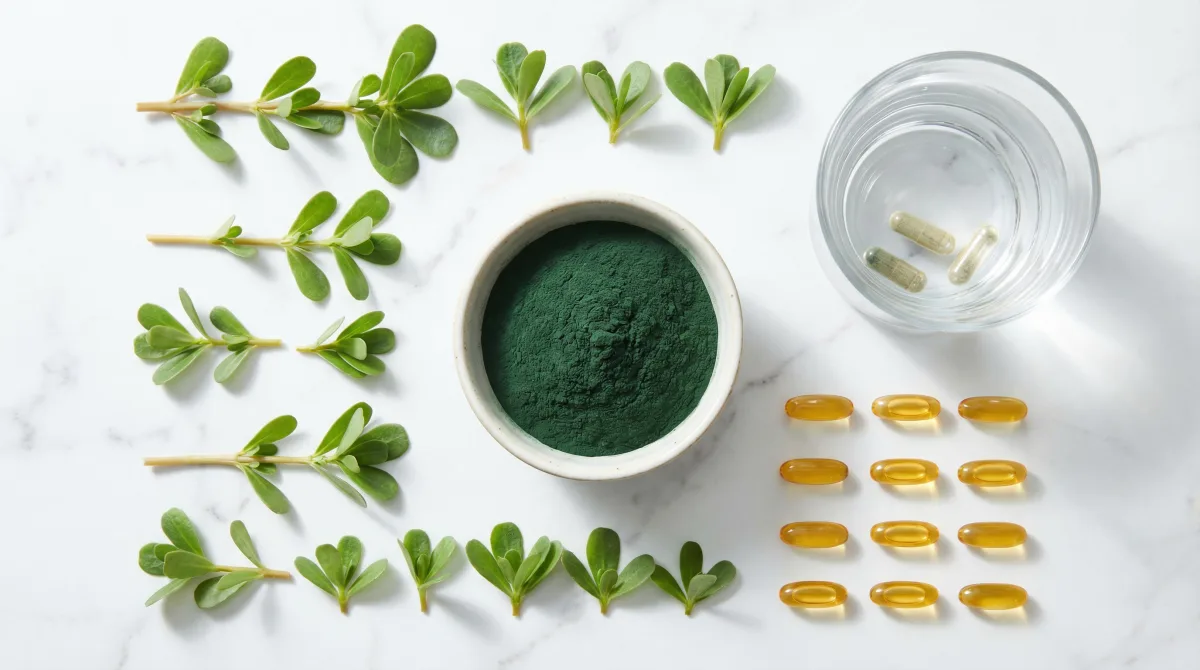
1 The Headline Numbers
- 5× more omega-3s than spinach
- 2.5× more lutein than corn
The omega-3 in question is alpha-linolenic acid (ALA), the plant-form omega-3 your body uses to keep its omega-6 to omega-3 ratio in check. Most modern diets run that ratio badly lopsided toward omega-6, which is associated with a more inflammatory baseline. A leafy green that tips the balance the other way — while also delivering lutein, beta-carotene, vitamin C, and magnesium — is a rare find.
2 What the Research Actually Shows
It's easy to find breathless claims about "superfoods." Purslane is unusual in that it has been put through a proper clinical trial. In a 2024 randomized, double-blind, placebo-controlled study published in Frontiers in Nutrition, 70 patients with non-alcoholic fatty liver disease took 700 mg/day of a purslane extract alongside a calorie-restricted diet for eight weeks.
Compared with placebo, the purslane group saw statistically significant improvements across the board:
- Liver enzymes (AST, ALT, GGT) fell
- Lipids improved — total cholesterol and triglycerides down, HDL up
- Fasting blood sugar and insulin-resistance index improved
- Inflammatory markers IL-6, hs-CRP, and ESR all decreased
- Antioxidant enzymes (SOD, glutathione peroxidase, catalase) rose
That is a coherent picture: less inflammation, better metabolic control, and stronger antioxidant defenses — the same levers that matter for long-term health and athletic recovery. Worth stressing that the trial used a concentrated extract on top of a diet, so it isn't a promise that a side salad cures anything; but it does put real evidence under the "longevity weed" reputation.
3 Preparation Guide (Critical)
There is one catch. Purslane is high in oxalates, the same compounds that concern people prone to kidney stones. Cooking would cut the oxalates but also degrade the heat-sensitive omega-3s you came for. The fix is the Yoghurt Pairing Method:
Mix raw purslane with calcium-rich yoghurt. The calcium binds the oxalates in
your gut so they pass through unabsorbed, while keeping the leaves raw
preserves the fragile omega-3 oils.
You get the fatty acids and antioxidants intact, and you sidestep the oxalate problem — no heat required. A handful of chopped purslane stirred into plain Greek yoghurt with a little salt and lemon makes a genuinely good side.
4 The Bottom Line
A free, hardy, ridiculously nutritious green is probably already growing where you live. Stop weeding it, start eating it — raw, with yoghurt.
5 Reference
Milkarizi N, Barghchi H, Belyani S, Bahari H, Rajabzade F, et al. Effects of Portulaca oleracea (purslane) on liver function tests, metabolic profile, oxidative stress and inflammatory biomarkers in patients with non-alcoholic fatty liver disease: a randomized, double-blind clinical trial. Frontiers in Nutrition, 2024. doi:10.3389/fnut.2024.1371137